Tuscany / A seven-day framework
A considered week in Tuscany
Follow Chianti’s main road towards Siena, then give the hill towns and working landscape of the Val d’Orcia room to breathe. This seven-day route is a framework, not a timed driving schedule: check current access and transport before setting out.
Published 20 October 2026
Before you begin: leave room in the week
Use the first two days for the SR222 through Chianti, then make a separate transfer to the southern part of the route. Siena is a direction of travel here, not an included sightseeing day. Consider the Chianti towns as a base area for the first part and Pienza or another southern hill town for the later days; these are planning choices, not accommodation recommendations. Allow space for the transfer at the end of Day 2 or before beginning Day 3, after checking the journey against your own arrangements.
A car offers flexibility where rural public transport can be limited, particularly on Sundays and holidays. It does not, however, give you permission to enter a restricted-traffic zone (ZTL). Check current transport, parking and access arrangements for each stop rather than treating this as a turn-by-turn driving plan.
Days 1–2: take the Chianti road towards Siena
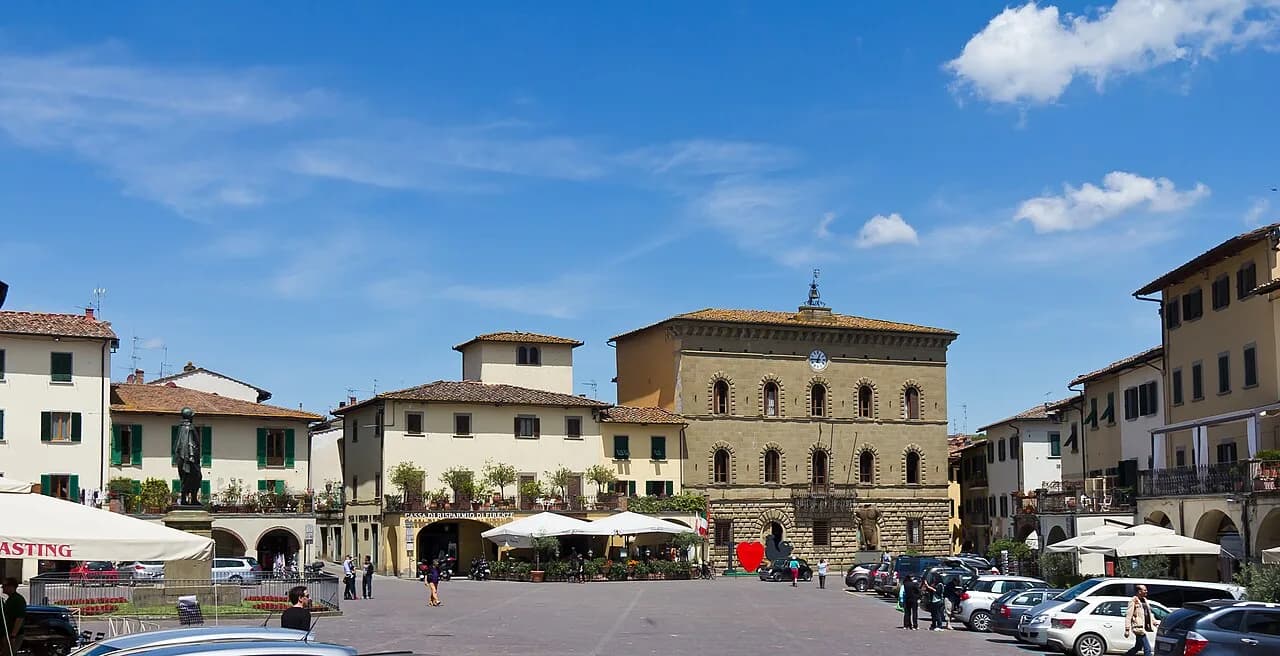
Begin on the SR222, which links Florence and Siena through Chianti. Make Greve your first pause for its arcaded Piazza Matteotti, then consider Panzano Alto and its castle. Neither day needs to become a hunt for every village on the map.
On the second day, continue towards Castellina, where Via delle Volte offers a covered walk through town. Radda and Gaiole are possible detours, not required stops. The narrow, partly unpaved route via Montefioralle and Badia a Passignano is not a default choice for a rental car. If you plan to transfer south that day, shorten the village list rather than attaching a full additional excursion to it. No drive time is assumed.

Day 3: walk uphill in Montepulciano
Montepulciano occupies a ridge between the Valdichiana and Val d’Orcia. Its route from Porta al Prato climbs towards Piazza Grande; allow the slope, rather than a checklist, to set the pace. San Biagio stands below the walls and makes more sense as a separate stop than as an effortless extension of the uphill walk.
This is a useful place to keep the region’s names straight. Montepulciano is not one of the five Val d’Orcia park municipalities. Its Vino Nobile is distinct from both Brunello, associated with Montalcino, and Montepulciano d’Abruzzo.
Day 4: understand Pienza on its own terms
In Pienza, start with Piazza Pio II and the buildings around it. Pius II commissioned the town’s Renaissance transformation in 1459, and Rossellino worked on the trapezoidal square, cathedral and neighbouring palaces. Pienza is a UNESCO property in its own right as well as a municipality within the Val d’Orcia landscape; the two designations describe different aspects of the place.
Look for pecorino and handmade pici when choosing somewhere to eat in Pienza. Check opening arrangements for historic buildings separately.
Day 5: a slower Pienza-based day, with one optional excursion
Keep this day based around Pienza rather than making another transfer compulsory. Leave the morning or afternoon open, and choose Monticchiello as one optional excursion if its medieval walls, keep and village setting interest you. It lies in Pienza municipality. Its Teatro Povero is a community theatre; check the programme if a performance is central to your plans.
Alternatively, make the Vitaleta chapel your single excursion. It stands between San Quirico d’Orcia and Pienza, with an unpaved approach off the SP146 and a final walk. Check current access, and do not assume you can drive to the chapel, enter it or cross surrounding fields. The rest of this day is deliberately unallocated: time to return to Pienza, revisit a square or leave room for a change of plan.
Day 6: gardens and thermal history
In San Quirico d’Orcia, the Horti Leonini offers a closer look at a designed landscape within the town. This 16th-century garden is associated with Diomede Leoni and laid out with triangular box-hedge beds.
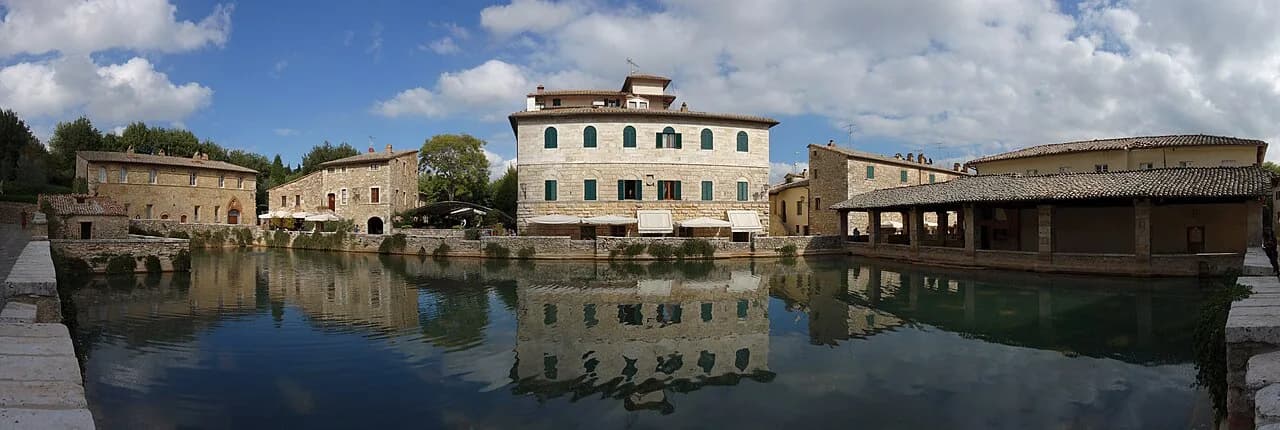
Bagno Vignoni makes a contrasting second stop. Its central stone thermal basin is part of the village’s character, but it is not for swimming. The Parco dei Mulini relates to historic mills; bathing, where available, belongs to separate spa facilities. Check current access and availability if a spa visit matters to you.
Day 7: finish in Montalcino
Spend the final day in Montalcino, a medieval hill town associated with Brunello. Its fortress dates to 1361, while Piazza del Popolo and Palazzo dei Priori give a walk through town a focus beyond wine. Notice the surrounding woodland, vines and olives as part of the working landscape, rather than treating the town as an isolated stop.
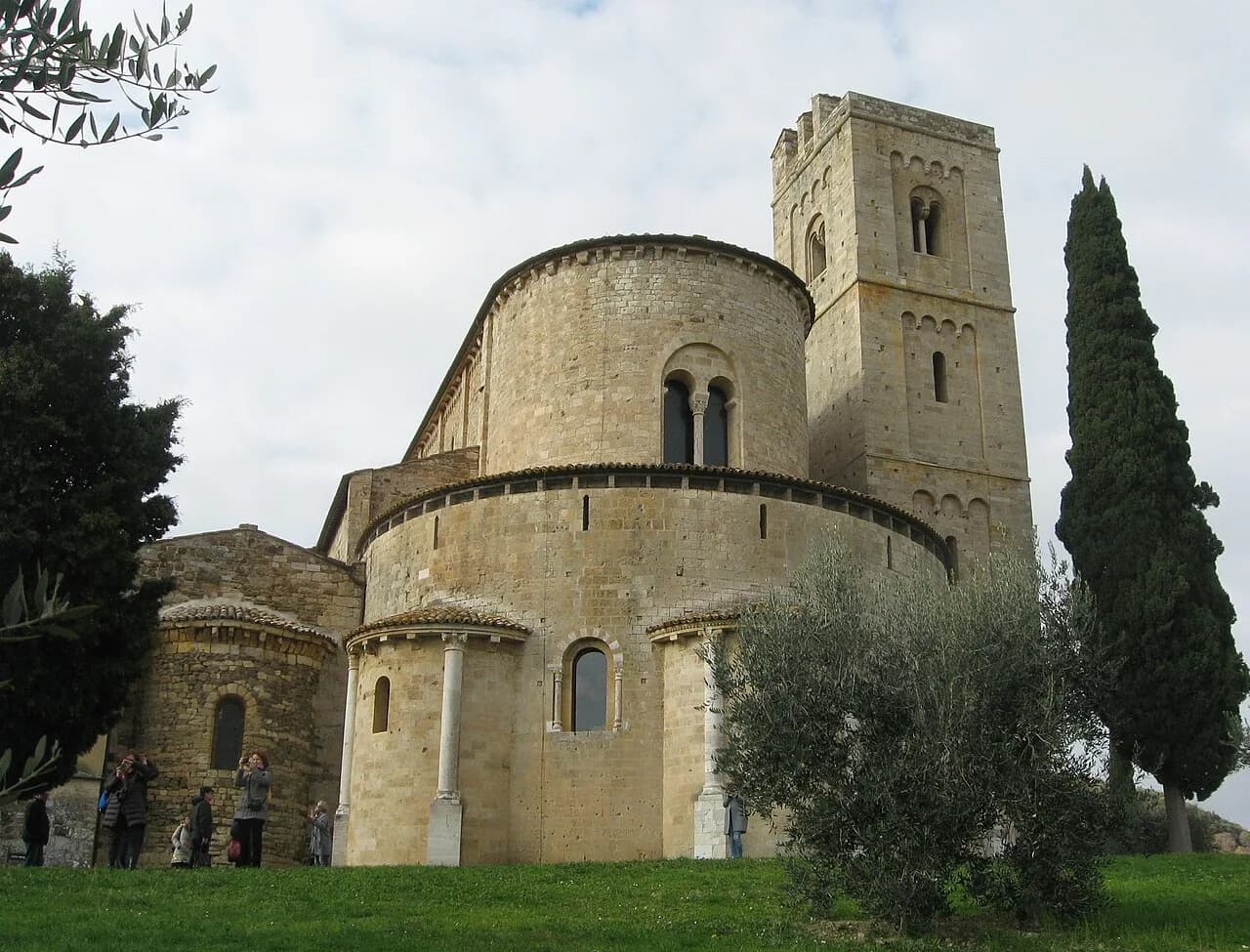
If time and current access allow, consider Sant’Antimo near Castelnuovo dell’Abate as an additional stop. The Romanesque abbey has three naves and carved capitals. Its Charlemagne connection is a legend; neither entry nor chanting should be assumed. The town alone is enough for a satisfying final day.

What the landscape—and the season—change
The Val d’Orcia was inscribed by UNESCO in 2004 as a working agricultural cultural landscape shaped by Siena and Renaissance ideals. Its five park municipalities are Montalcino, Pienza, San Quirico d’Orcia, Castiglione d’Orcia and Radicofani. This route visits some, not all, of them; the designation is an invitation to notice cultivated land as well as town centres, not a guarantee of visitor access.
Spring and autumn are recommended for walking, while summer can be hot. Harvest generally falls in late summer or early autumn, but dates vary; autumn can also bring cooler, rainy weather. Choose a season for the conditions you are prepared to travel in, rather than expecting a particular harvest scene.
Check the practical details before travel
Check current opening hours, prices, performances, spa availability and site access before travelling. The cited Pienza municipal regulation describes separate, electronically monitored ZTLs for Pienza and Monticchiello; its specific Monticchiello accommodation-permit provision is not a general hotel exemption. Confirm the latest rules and any permit procedure with the relevant local authority or accommodation before driving into a restricted area.
Keep optional excursions optional, especially where an approach is unpaved or a visit depends on access. That small amount of advance checking protects the unhurried part of the week: time to walk a town properly, and the freedom to leave the next stop for another day.
Sources & further reading 15 references
Sources support the linked sections. Check current local arrangements before travelling.
- whc.unesco.org · S01Accessed 2026-10-17
- whc.unesco.org · S02Accessed 2026-10-17
- www.visittuscany.com · S03Accessed 2026-10-17
- www.visittuscany.com · S04Accessed 2026-10-17
- www.visittuscany.com · S05Accessed 2026-10-17
- www.visittuscany.com · S06Accessed 2026-10-17
- www.visittuscany.com · S07Accessed 2026-10-17
- www.visittuscany.com · S08Accessed 2026-10-17
- www.visittuscany.com · S09Accessed 2026-10-17
- www.visittuscany.com · S10Accessed 2026-10-17
- www.visittuscany.com · S11Accessed 2026-10-17
- www.visittuscany.com · S12Accessed 2026-10-17
- static-www.comune.pienza.si.it · S13Accessed 2026-10-17
- www.visittuscany.com · S14Accessed 2026-10-17
- www.visittuscany.com · S15Accessed 2026-10-17