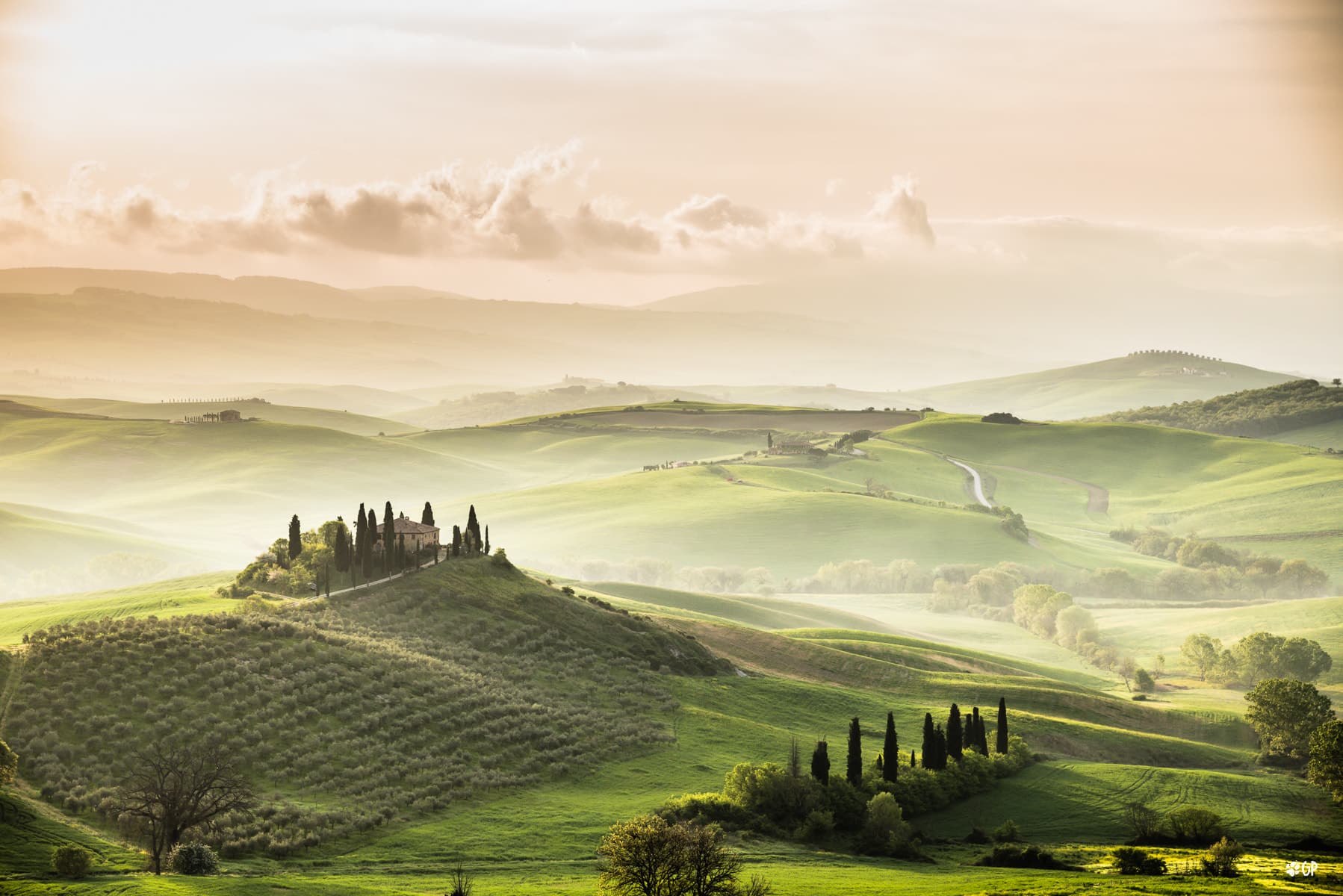

Tuscany rewards a little room in the day. A covered street can hold your attention longer than a celebrated viewpoint; a square becomes more interesting when you have time to understand how it fits together. The pleasure of driving here lies partly in what happens after you park.
This seven-day journey begins on the Florence side of Chianti, follows the landscape south to Montalcino and Val d’Orcia, and finishes in Montepulciano. Six nights are divided between three bases: two in Chianti, two around Montalcino and two around Pienza. That leaves time to return to a place, unpack properly and make a morning’s decision over breakfast.
It is an open route. Arrange onward travel from Montepulciano separately, and allow extra time or nights for airport journeys and any return to Florence. The week itself is for the country in between.
Find your rhythm in Chianti
Use the Chiantigiana, the SR 222 between the Florence and Siena areas, as the backbone of your first day. Begin in Greve in Chianti, where the arcades of Piazza Matteotti give the old market square its distinctive shape. Walk a circuit before settling on somewhere for lunch.
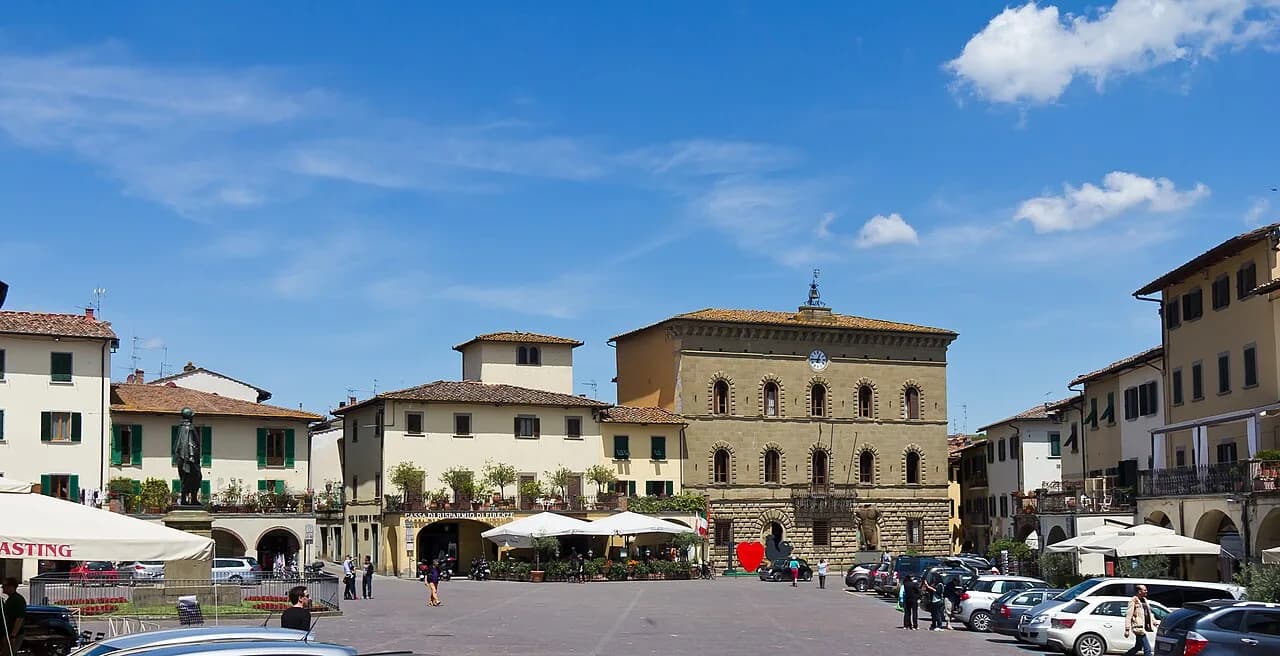

Continue to Panzano, leaving time for Panzano Alto and its older settlement around the castle. Two places are enough for an arrival day, especially if collecting a car is part of the morning.
Choose a Chianti base that suits the evenings you want. A village stay makes a walk after dinner easier; a countryside property puts more of the landscape around you but may mean driving for meals. Check those practicalities before booking your first two nights.
Chianti · night 1 of 2
Radda and Castellina, without the rush
Keep the same base and make a day of Radda in Chianti and Castellina in Chianti. Treat them as a small circuit with one longer visit and one shorter walk. Chianti’s towns require detours; they do not all sit neatly along the SR 222.
Give Castellina’s Via delle Volte particular attention. This covered medieval street offers a different way of seeing a hill town, through enclosed stone passages rather than an uninterrupted panorama. Let the architecture set the pace.
If wine is a priority, make an arranged winery visit the main afternoon activity and shorten the village circuit. Anyone driving should skip alcohol. A non-drinking driver or suitable transport belongs in the plan before a tasting is booked, rather than becoming a decision at the table.
Chianti · night 2 of 2
South to Montalcino
Today is the substantial change of base. Travel south through the Siena area towards Montalcino, giving the journey enough room to remain pleasant. Siena can become the day’s principal visit if you want a city interlude; in that case, keep the rest of the day to travelling and settling in.
Otherwise, aim for an unhurried introduction to Montalcino. The medieval hill town sits among woodland, vineyards and olive cultivation. Begin with its streets and Piazza del Popolo, where the town hall and bell tower provide a natural point of orientation.
Stay in or near Montalcino for two nights. There is no need to fit a fortress visit and a tasting into this first afternoon. Tomorrow is deliberately close to home.
Montalcino · night 1 of 2
Stone, vines and Sant’Antimo
Spend the morning in Montalcino, with the fourteenth-century fortress as your architectural anchor. Leave time for the streets around it and for lunch before heading towards Castelnuovo dell’Abate and the Abbey of Sant’Antimo.
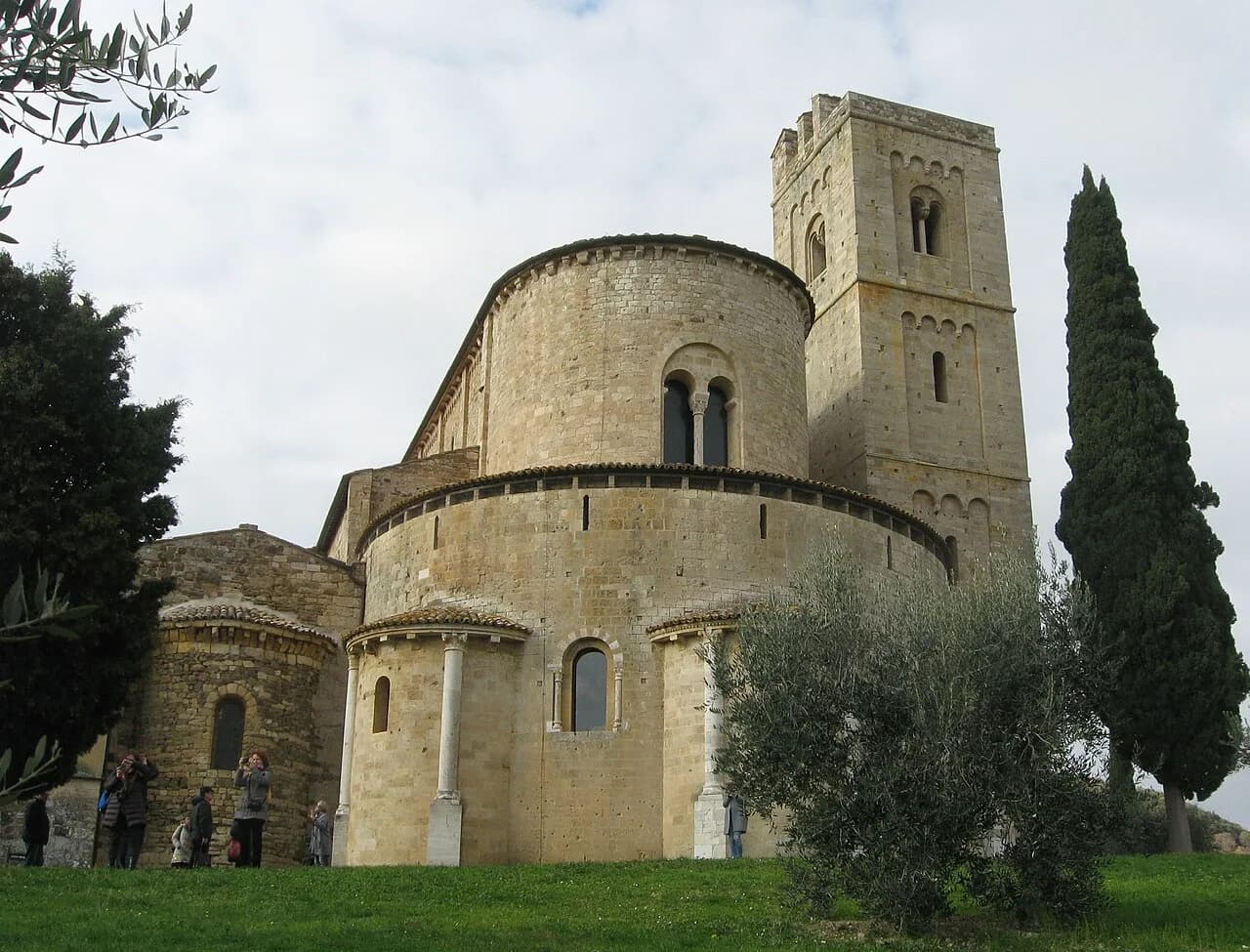

The Romanesque abbey stands in the Starcia valley. Travertine, alabaster, columns and carved capitals give the visit a focus at the scale of individual details. Check access and any worship-related restrictions before going; plan around the building itself rather than an assumed service or musical performance.
Montalcino is the home of Brunello di Montalcino. If a winery appointment matters more to you than a second architectural visit, substitute it for part of the day. Keeping one afternoon flexible makes space for a deeper interest without turning the route into a list of obligations.
Montalcino · night 2 of 2
Gardens and the water square
Leave Montalcino for San Quirico d’Orcia and the Horti Leonini. The sixteenth-century garden’s geometric beds and box hedges bring a more intimate sense of order to the landscape. A walk here makes a satisfying first stop before continuing to Bagno Vignoni.
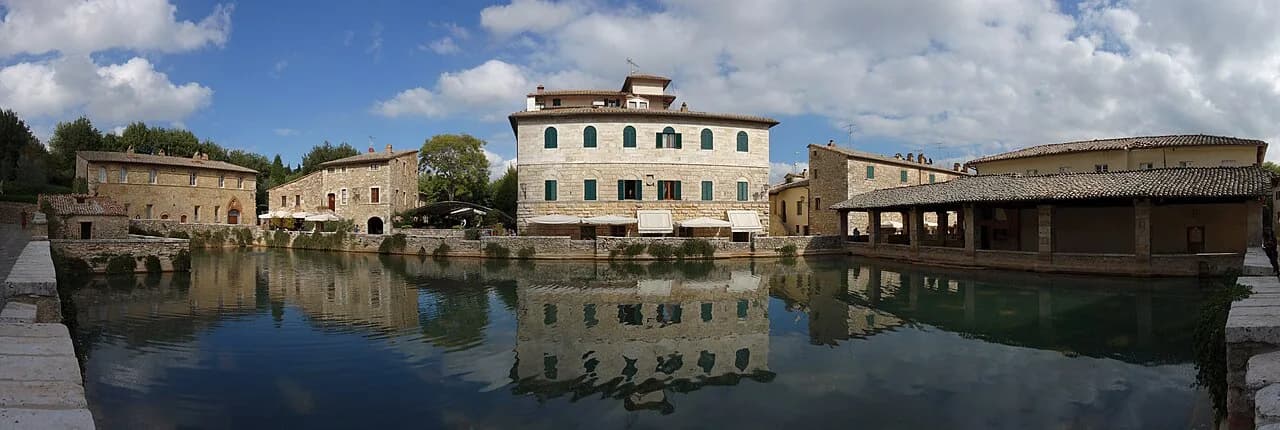

At Bagno Vignoni, thermal water fills a great stone basin at the centre of the village. Walk around the square and consider the water’s working history at the nearby Parco dei Mulini, with its rock-cut mills. Swimming in the central basin is prohibited. A bathing session means choosing a separate facility and making its arrangements independently.
Continue to Pienza for the first of two nights. Resist adding every viewpoint to the transfer. The road between San Quirico and Pienza is already part of the day’s pleasure; photograph it only from places where stopping is safe and permitted.
Pienza · night 1 of 2
Give Pienza a whole morning
Pienza deserves time at walking pace. In 1459, Pope Pius II began transforming his birthplace with the architect Bernardo Rossellino. Piazza Pio II makes the ambition tangible: the trapezoidal square brings the cathedral, Piccolomini Palace and Borgia Palace into a carefully composed relationship.
Pause in the square, then move through the streets beyond it. A cheese-shop visit offers an introduction to pecorino di Pienza; look for pici, the local handmade pasta, when choosing lunch.
For the afternoon, stay put or visit Monticchiello. Its medieval walls and keep offer a different architectural character, while the village’s Teatro Povero tradition draws on local life and history. Check the programme separately if a performance interests you. This is a living community, and a village walk is worthwhile without an event attached.
Pienza · night 2 of 2
Finish on Montepulciano’s ridge
Make Montepulciano the final destination. From Porta al Prato, the walk through the historic centre climbs towards Piazza Grande, with its cathedral and Palazzo Comunale. Allow for the slope when choosing parking, footwear and how much you want to cover.
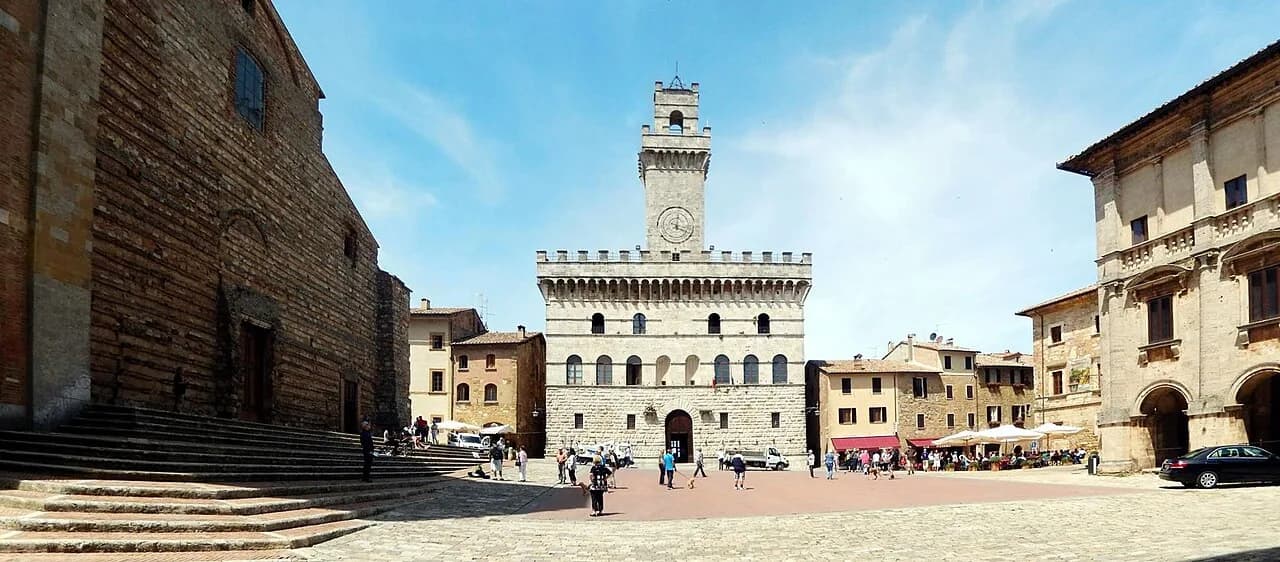

The church of Madonna di San Biagio, below the walls, can provide a second architectural focus if the day allows. Its Renaissance design is by Antonio da Sangallo the Elder.
Here the wine to know is Vino Nobile di Montepulciano, distinct from Montalcino’s Brunello. Keep the same non-drinking-driver plan if a tasting features in your final day. End the itinerary here, with onward travel already accounted for, rather than squeezing a return to Florence into the margins.
Route ends · onward travel separately
Make the practical details disappear into the plan
Spring and autumn are appealing choices for a walking-led trip, though neither guarantees mild weather or quiet roads. Summer calls for more care with the timing of longer walks; autumn needs room for rain and cooler days. Choose accommodation with somewhere you would enjoy spending an unscheduled afternoon.
Before each arrival, ask for exact parking and access instructions. Historic centres often have restricted-traffic zones, or ZTLs, and a rental car or hotel booking does not automatically grant entry. Use signed parking and follow current local signs. Keep the driving route on suitable paved public roads, checking rental terms before any gravel detour.
Confirm attraction access and winery appointments shortly before travelling. Leave farm entrances clear, respect private land and let a missed photograph remain a missed photograph.
Val d’Orcia’s celebrated landscape is a working place, shaped by cultivation and settlement over centuries. A good week gives that history room to emerge: in a garden, an abbey, a planned square, and the roads that connect them.
Keep the details current
This proposed itinerary draws on Visit Tuscany and UNESCO references checked on 17 October 2026. Check current opening hours, access, road conditions and appointments before travelling. “Quieter roads” describes the aim of the journey; traffic varies.